

|
And they were profitable in the reality of those times because the Cubujuquí hamlet was of a similar size to the neighboring Barva hamlet and the declaration of "Villa" made its inhabitants feel fulfilled so they contributed greater effort to its development; With that name emerged from Villa to City and the name of the Province, Heredia.
The City Heredia occupies the entire Heredia Canton and has hegemony in large part
of the Central Volcanic Mountain Range of which it occupies both slopes. Of the ten
Nine cantons of the province are its neighbors and, daily, many of the residents of those areas usually visit the Municipal Market, famous because the visitor finds practically everything necessary for the best national and international cuisine just a few minutes away along the excellent communication routes. and urban transportation.

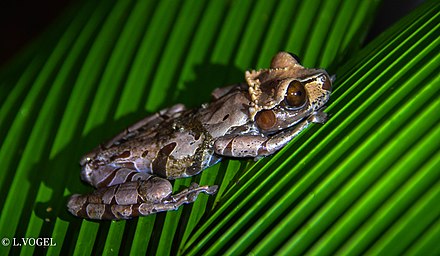
The mountainous slope to the north of the Central Valley adjoins the plain watered by the Sarapiquí River that flows into the San Juan River of Nicaragua. The upper part of the mountain range is territory with very dense primary and secondary forest with the Tres Marías hills that are part of a group of biological reserves of the Braulio Carrillo National Park where the Barva Volcano is located.
In 1914, the President of the Republic of Costa Rica
Lic. Alfredo González Flores established the Normal School for men and women where people graduated who worked as primary and secondary school teachers; to the point that, in every school in the country, they said as a popular saying, you will find Heredian people giving lessons.
The City of Heredia is the birthplace of the Club Sport Herediano soccer team, famous for its
many championships won in the history of the country where World Cup stars share in its Eladio Rosabal Cordero Stadium. Don Eladio, in addition to being founder of the "Team Florense", was also a pioneer co-founder of the Costa Rican Football Federation.
In the past, strangers who came from neighboring towns liked to sit or walk through Ulloa Park. The city-dwellers preferred to observe them
from the street with which a popular feeling was born that also in times gone by was quite a cry... Long live Heredia on half a street!
+
San Pablo, Heredia, Costa Rica
What was once "the sabanilla de los villalobos" changed its name because, according to reports from neighbors over 60 years of age, consulted in 1978 on our television program "Costa Rica is like this", religious authorities would have held a raffle with the names of several saints to designate the name of the canton. The favored one was San Pablo.
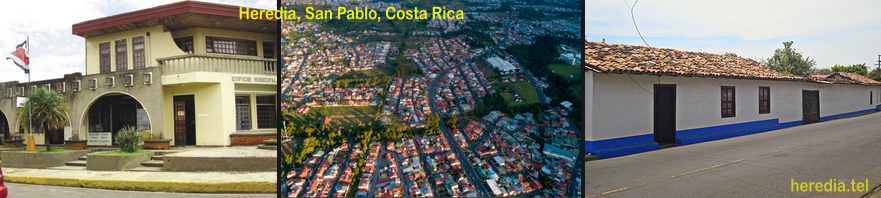
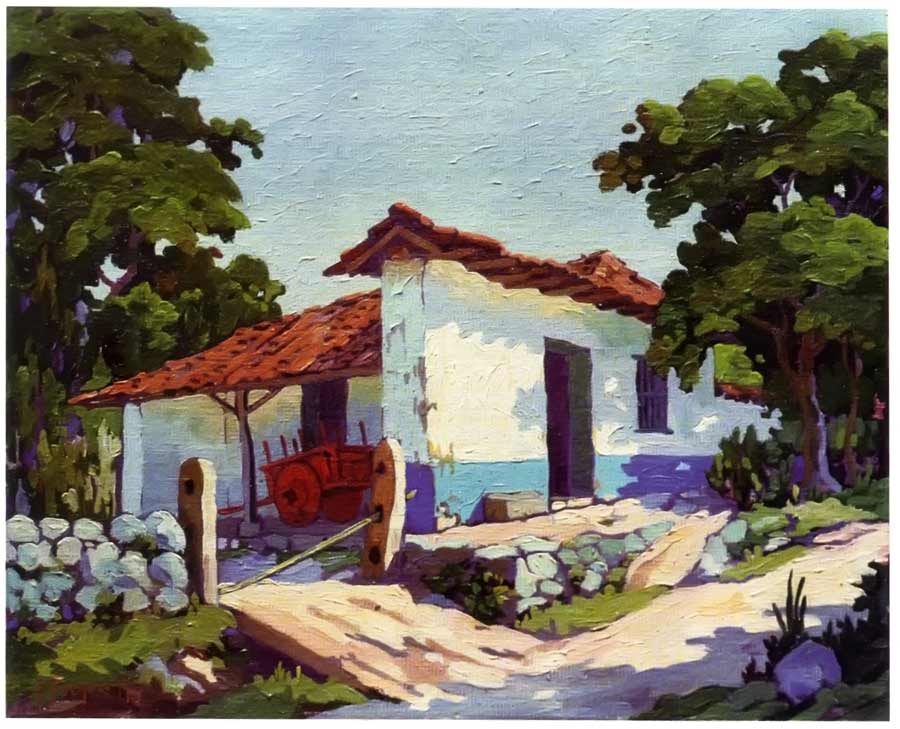
It was an old-fashioned town and since the end of the 20th century it has been completely populated with buildings. San Pablo de Heredia is a unique city and district in one of the smallest cantons of Costa Rica and achieved its cantonship due to the cultivation of coffee, which allowed great economic income to the few settlers of that last century. Two or three of the famous adobe houses still exist, similar to those he painted Fausto Pacheco surrounded by flowers
and its appearance is well preserved by its owners, given the excellence of the materials used in its construction, which condition the air with respect to the climate.
+
San Rafael, Heredia, Costa Rica
This town was born as a result of being an extension of the City of Heredia, today it is one of its neighborhoods with constant vehicle traffic towards private clubs, restaurants, cabins and hotels and also a large number of passersby such as national and foreign tourists heading to Monte de la Cruz, to Bosque de la Hoja or to Las Chorreras.
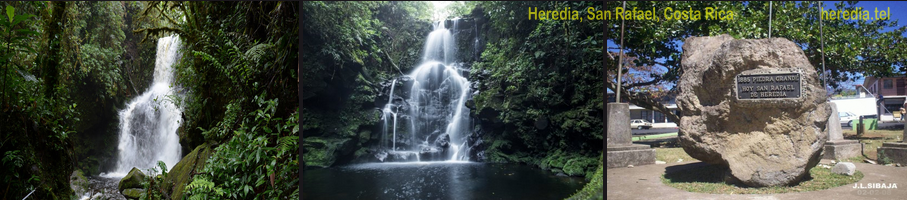
The version of the name of the town coincides with the cantons of San Pablo and San Isidro de Heredia, meaning that ecclesiastical authorities, through a raffle among several names of saints according to a popular saying, gave it the name. This version was confirmed by Heredia residents over 60 years of age, consulted in 1979 on our television program "Costa Rica is like this", religious authorities would have held a raffle to designate the name of the canton. The favored one was San Rafael.
+
Santa Bárbara, Heredia, Costa Rica
With the name "Churruca" and later, as Barrio de los Targuaces, the place where Santa Bárbara City, head of the canton, is located today, was known. It was Doña Bárbara, wife of the local Cayetano Esquivel, who had an image of the saint
of her name and her devotion. Saint admired and venerated by neighbors. During the years of Costa Rica's independence from Spain, the locals began to give the name of Santa Bárbara to their population.
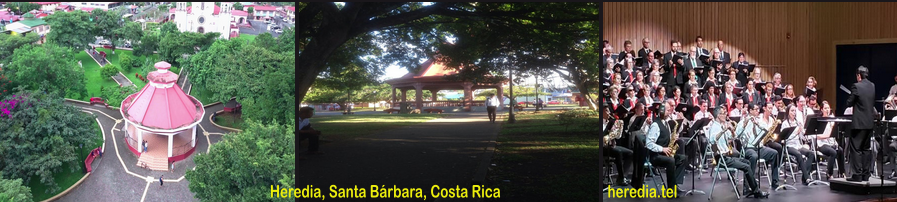
The center of the town is attractive for its quiet atmosphere although, given global development, it may be smaller than what it once was an ancestral place of peace.
+
The City Heredia occupies the entire Heredia Canton and has hegemony in large part of the Central Volcanic Mountain Range of which it occupies both slopes. Of the ten Nine cantons of the province are its neighbors and, daily, many of the residents of those areas usually visit the Municipal Market, famous because the visitor finds practically everything necessary for the best national and international cuisine just a few minutes away along the excellent communication routes. and urban transportation.
|
|
In 1914, the President of the Republic of Costa Rica Lic. Alfredo González Flores established the Normal School for men and women where people graduated who worked as primary and secondary school teachers; to the point that, in every school in the country, they said as a popular saying, you will find Heredian people giving lessons.
The City of Heredia is the birthplace of the Club Sport Herediano soccer team, famous for its many championships won in the history of the country where World Cup stars share in its Eladio Rosabal Cordero Stadium. Don Eladio, in addition to being founder of the "Team Florense", was also a pioneer co-founder of the Costa Rican Football Federation.
In the past, strangers who came from neighboring towns liked to sit or walk through Ulloa Park. The city-dwellers preferred to observe them from the street with which a popular feeling was born that also in times gone by was quite a cry... Long live Heredia on half a street!
+
San Pablo, Heredia, Costa Rica
What was once "the sabanilla de los villalobos" changed its name because, according to reports from neighbors over 60 years of age, consulted in 1978 on our television program "Costa Rica is like this", religious authorities would have held a raffle with the names of several saints to designate the name of the canton. The favored one was San Pablo.
|
|
+
San Rafael, Heredia, Costa Rica
This town was born as a result of being an extension of the City of Heredia, today it is one of its neighborhoods with constant vehicle traffic towards private clubs, restaurants, cabins and hotels and also a large number of passersby such as national and foreign tourists heading to Monte de la Cruz, to Bosque de la Hoja or to Las Chorreras.
|
|
+
Santa Bárbara, Heredia, Costa Rica
With the name "Churruca" and later, as Barrio de los Targuaces, the place where Santa Bárbara City, head of the canton, is located today, was known. It was Doña Bárbara, wife of the local Cayetano Esquivel, who had an image of the saint of her name and her devotion. Saint admired and venerated by neighbors. During the years of Costa Rica's independence from Spain, the locals began to give the name of Santa Bárbara to their population.
|
|
+
| 
| 
| 
|
Heredia: Parque Nacional Braulio Carrillo

| 

|